A Galaxy Full of Planets, but No Proof of Alien Intelligence
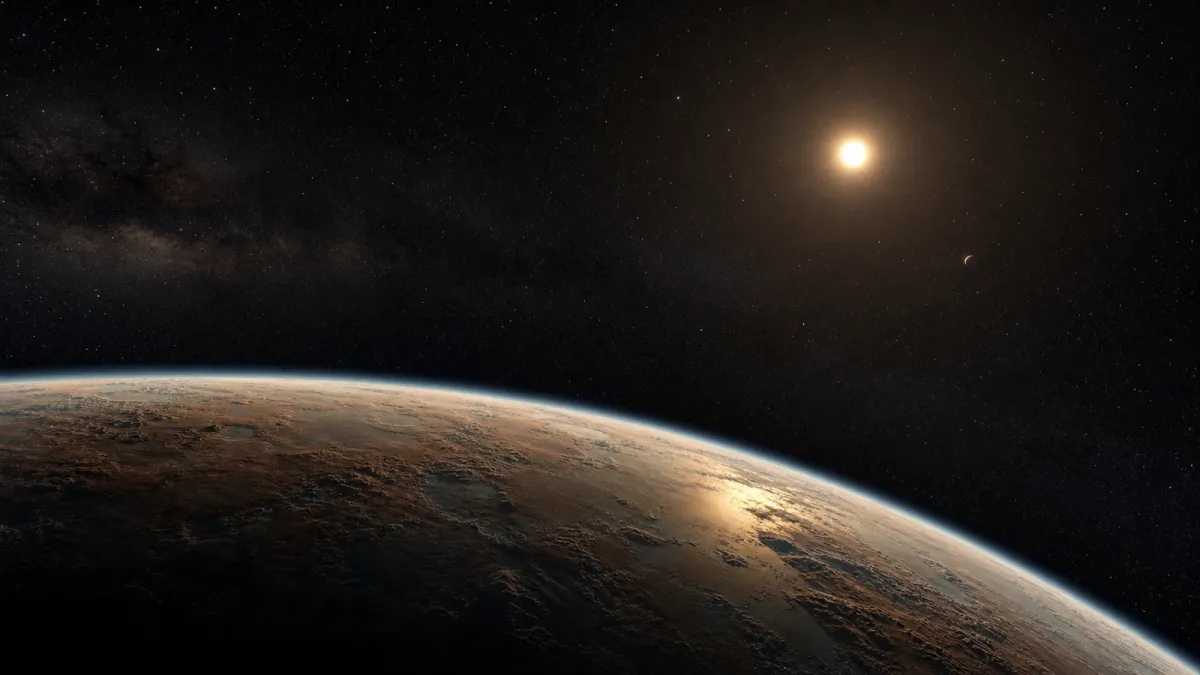
With so many planets in the universe, I find it hard to believe that Earth is the only place with intelligent life. That is my conviction; it is not a scientific discovery.
Franch Hagerup. The factual explanation below has been editorially checked, with the distinction between belief and evidence made explicit.
For most of human history, planets around other stars belonged to philosophy and speculation. Today they belong to catalogues. The NASA Exoplanet Archive catalogues thousands of confirmed exoplanets, alongside candidates awaiting confirmation.
That is a profound change in what we know. It is also easy to turn it into a claim the evidence does not support: that a galaxy full of planets must be a galaxy full of intelligent beings.
The honest position is more interesting. We have learned that worlds are common. We have not learned how often matter becomes life, how often life becomes intelligence, or how often intelligence becomes visible across interstellar distance.
We were wrong about the rarity of planets
The first confirmed planet orbiting a Sun-like star was announced in 1995. Three decades later, astronomers have found hot gas giants skimming their stars, rocky planets, compact systems with several worlds, planets around binary stars and bodies unlike anything in our solar system.
The old picture – one familiar system surrounded by mostly empty stars – is gone. Data from NASA’s retired Kepler telescope indicate that planets probably outnumber stars in the Milky Way. Our galaxy contains at least about 100 billion stars, so even cautious estimates produce an enormous number of worlds.
But a large denominator does not settle every probability that follows. A planet can exist without being rocky. A rocky planet can exist without stable surface water. Water can exist without life. Life can exist without intelligence, and intelligence can exist without producing a signal that reaches us.
TESS detects shadows, not alien landscapes
NASA’s TESS mission, launched in 2018, is one of the main planet finders. Its candidates must be distinguished from planets confirmed after further analysis.
Most TESS candidates begin as tiny, repeating dips in a star’s brightness. If a planet crosses the face of its star from our point of view, it blocks a fraction of the light. The timing of repeated transits helps astronomers estimate the orbital period, while the depth of the dimming helps estimate the planet’s size.
This is a remarkably powerful method, but it does not show a surface, an ocean or a city. It also works only when an orbit is aligned so that the planet passes between its star and our telescopes. Many real planets will never transit from Earth’s point of view.
A candidate must also survive follow-up checks. Binary stars, background objects and instrumental effects can imitate a planetary signal. Confirmation is the point at which a promising pattern becomes a defensible planet.
“Habitable” is a filter, not a verdict
The phrase “habitable zone” is one of the most seductive labels in astronomy. It describes the range around a star where liquid water could exist on a planet’s surface, assuming suitable atmospheric conditions.
That last condition matters. Distance alone cannot tell us whether a world has an atmosphere, whether the atmosphere is crushing or thin, whether the star regularly blasts the planet with radiation, or whether water remains stable for geological timescales.
Our own neighbourhood offers warnings. The Moon travels through the Sun’s habitable zone but is not a habitable world. Mars and Venus show how radically different environments can develop within one planetary system. A world in the right orbit is a promising target, not a second Earth.
Scientists still need to investigate size, mass, composition, climate, chemistry, magnetic environment, stellar activity and atmospheric gases. “Potentially habitable” is therefore a statement about where to look next.
Where the estimate of 300 million worlds comes from
A 2020 analysis using Kepler data estimated that the Milky Way could contain at least 300 million rocky, potentially habitable planets around stars broadly similar to the Sun in temperature. NASA presented that figure as a conservative estimate within the study’s assumptions.
Those worlds were not individually photographed or visited. The estimate comes from the rate at which Kepler detected certain kinds of planets, combined with models of stars, planetary size and the amount of energy a planet receives.
The result tells us that promising environments may be common enough for systematic study. It does not tell us that 300 million planets contain oceans, microbes or civilisations.
This is the central distinction: statistics can estimate the number of opportunities. They cannot, with only one known inhabited planet, tell us the success rate of life.
The multiplication problem
Arguments about intelligent life often work like a chain of multiplications. Start with the number of stars. Multiply by the fraction with planets. Then multiply by the fraction of planets with suitable conditions, the fraction where life begins, the fraction where complex intelligence evolves, and the fraction that produces detectable technology for long enough to overlap with us.
Astronomy has improved the first terms dramatically. We now know that planets are common and that small rocky worlds exist. The later terms remain almost completely unconstrained.
Earth gives us one example of life and one example of a technological species. One data point cannot reveal whether biology appears easily whenever conditions allow it, or whether our history depended on an extraordinary sequence of accidents.
Time adds another difficulty. A civilisation 5,000 light-years away may have sent a signal before humans built radios, or may not develop detectable technology until long after ours is gone. Two inhabited planets can share a galaxy without sharing a moment of communication.
What would count as evidence?
The search for life increasingly focuses on planetary atmospheres. Telescopes can analyse starlight filtered through an atmosphere and look for chemical combinations that might indicate biological activity.
No single gas should be treated as a magic answer. Geological and photochemical processes can create false positives. A strong claim would require multiple lines of evidence, repeat observations and serious attempts to rule out non-biological explanations.
Intelligent life could leave technosignatures rather than biosignatures. Radio transmissions are the familiar example, but researchers also consider other possible traces of technology in light, heat or atmospheric chemistry.
So far, NASA states that we have no evidence of life beyond Earth. There is no confirmed alien signal, no verified extraterrestrial organism and no atmosphere that has settled the question.
Uncertainty is not the same as pessimism
It is reasonable to feel that life should exist elsewhere. The galaxy is old, planets are abundant and chemistry is universal. It is equally reasonable for science to withhold a conclusion until evidence arrives.
The exciting fact is not that alien intelligence has been proved. It is that the search now has real targets. Astronomers can rank nearby rocky planets, measure their orbits, estimate their masses and begin testing their atmospheres. Future observatories are being designed specifically to study worlds closer to Earth in size and temperature.
We have moved from asking whether other planets exist to asking which of them deserve the deepest look. That is genuine progress, even if the final answer remains beyond reach.
For me, these enormous numbers give strong grounds for hope that life and intelligence exist elsewhere. Confirmation will still require evidence.
Sources and further reading
- NASA Exoplanet Archive: current confirmed-planet and TESS counts
- NASA: how TESS finds and confirms planetary candidates
- NASA/Kepler: the estimate for potentially habitable rocky planets
- NASA: what the habitable zone means
- NASA: the search for life beyond Earth
Belief and evidence clarified on 5 October 2026. Explore more evidence-led articles in Ponett’s Science section. This article was independently reformulated from an original Norwegian text by Franch Hagerup.


Leave a Reply
You must be logged in to post a comment.